kura
The solution designed with your veterinary assistants in mind
00

problem
In a veterinary clinic, vet nurses do it all: prepping surgeries, handling reception, providing care — and managing post-op follow-up. That last part often comes down to a phone that never stops ringing, with 8 out of 10 calls about something harmless. The result: up to 10 hours a week swallowed by unstructured follow-up, at the expense of everything else. And when a real complication hides in the noise, it slips through unnoticed.
solution
Kura automates post-op follow-up over WhatsApp — no app to install, neither for the clinic nor for the client. Right after discharge, the owner starts receiving structured check-ups built on a medical protocol calibrated for each stage of recovery: Kura asks the questions, collects the answers, and requests a wound photo when needed. The 8-in-10 harmless calls never reach the team. And when an answer signals trouble, Kura flags it, gauges the urgency, and alerts the clinic .
From day one, Kura set out to rethink how veterinary clinics handle post-operative follow-up. The idea came straight from the floor: nurses stretched thin, phones ringing nonstop, and the real complications hiding in a flood of harmless calls. Kura was built to give that time back — a follow-up that runs on its own between visits, keeps a watchful eye on every patient, and only speaks up when something genuinely needs attention. So clinics can stay focused on care, and owners get the reassurance they came for.
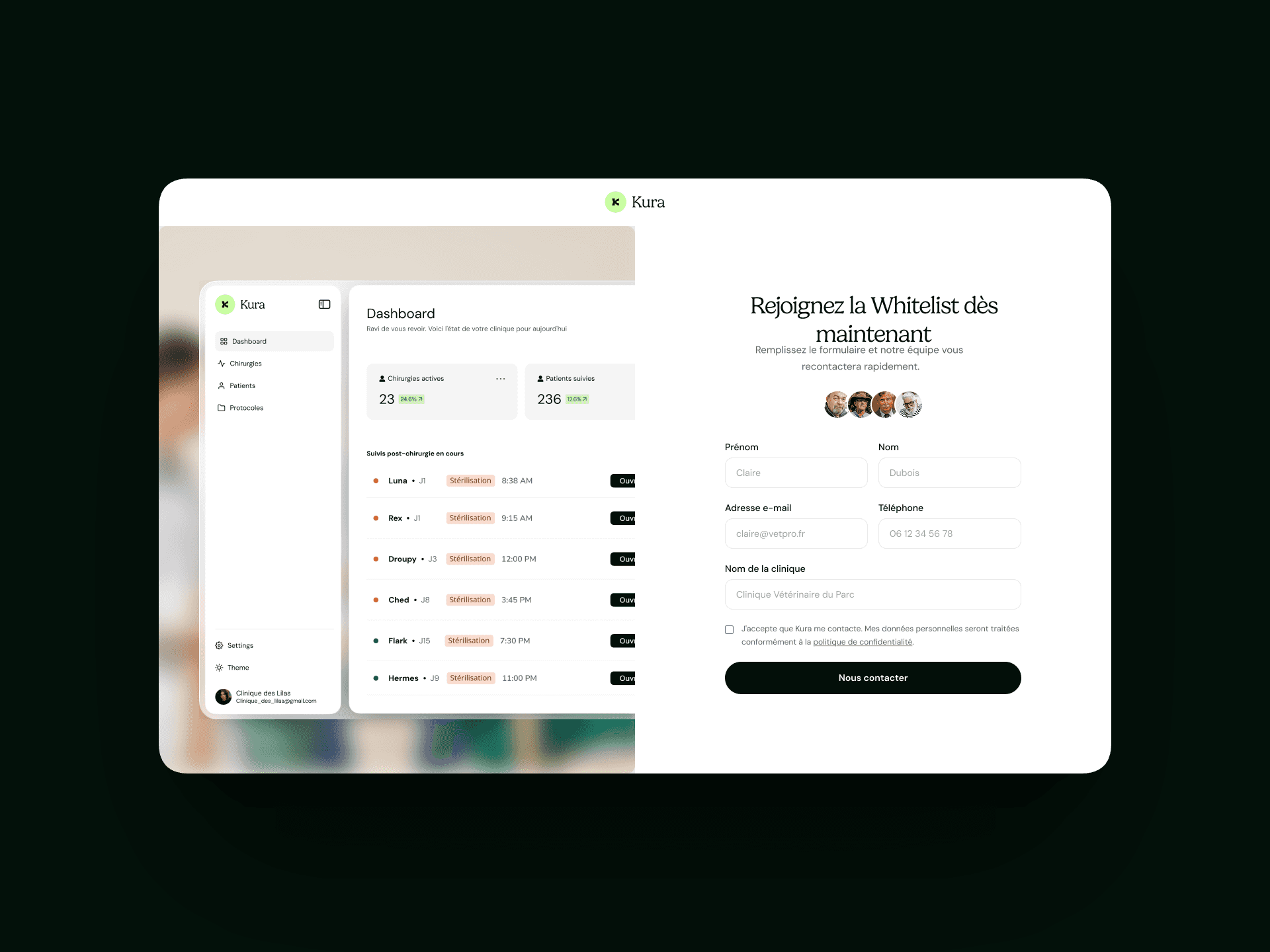
Kura started with a simple conviction: that the time veterinary teams lose to post-op follow-up could be given back to them. The work began on the floor — mapping the real pain points of clinics, talking with vets and nurses, and digging into how follow-up actually happens between two visits. The picture was consistent everywhere: hours swallowed by phone calls, most of them harmless, and no structured way to catch the cases that weren't. That understanding became the brief: build a follow-up system that fits the way clinics already work, instead of asking them to change.
Every decision during development came back to that brief. Rather than another app for clinics and owners to download, Kura runs entirely over WhatsApp — a channel everyone already uses, with nothing to install on either side. Its check-ups follow a medical protocol calibrated for each stage of recovery, so the questions are never random. And instead of flooding the team with updates, Kura was built to stay quiet by design: it handles the harmless exchanges on its own and only raises an alert when an answer signals real trouble. The goal throughout was a tool that feels invisible until the moment it matters.
Kura is being built with practitioners, not around them. Its founding partner clinics shape the product directly, so it earns its place in a real workflow from day one rather than after launch. Ahead of its May 2026 release, Kura is opening a limited beta to a first group of clinics — the start of what it aims to become: the quiet standard for post-operative care, where follow-up looks after every patient on its own, and teams are freed to focus on the work only they can do.
year
2026
timeframe
1 year
tools
Figma / Claude
category
UI/UX
01

02

03


